Brandschutz8

Sprinkler Warden Checklist & Operator Inspection Template

A properly functioning sprinkler system provides vital protection for lives and property. With our digital sprinkler warden checklist, operators and fire safety officers can document regular visual and functional checks quickly, seamlessly, and in compliance with regulations. Safeguard the operational readiness of your system according to VdS standards.

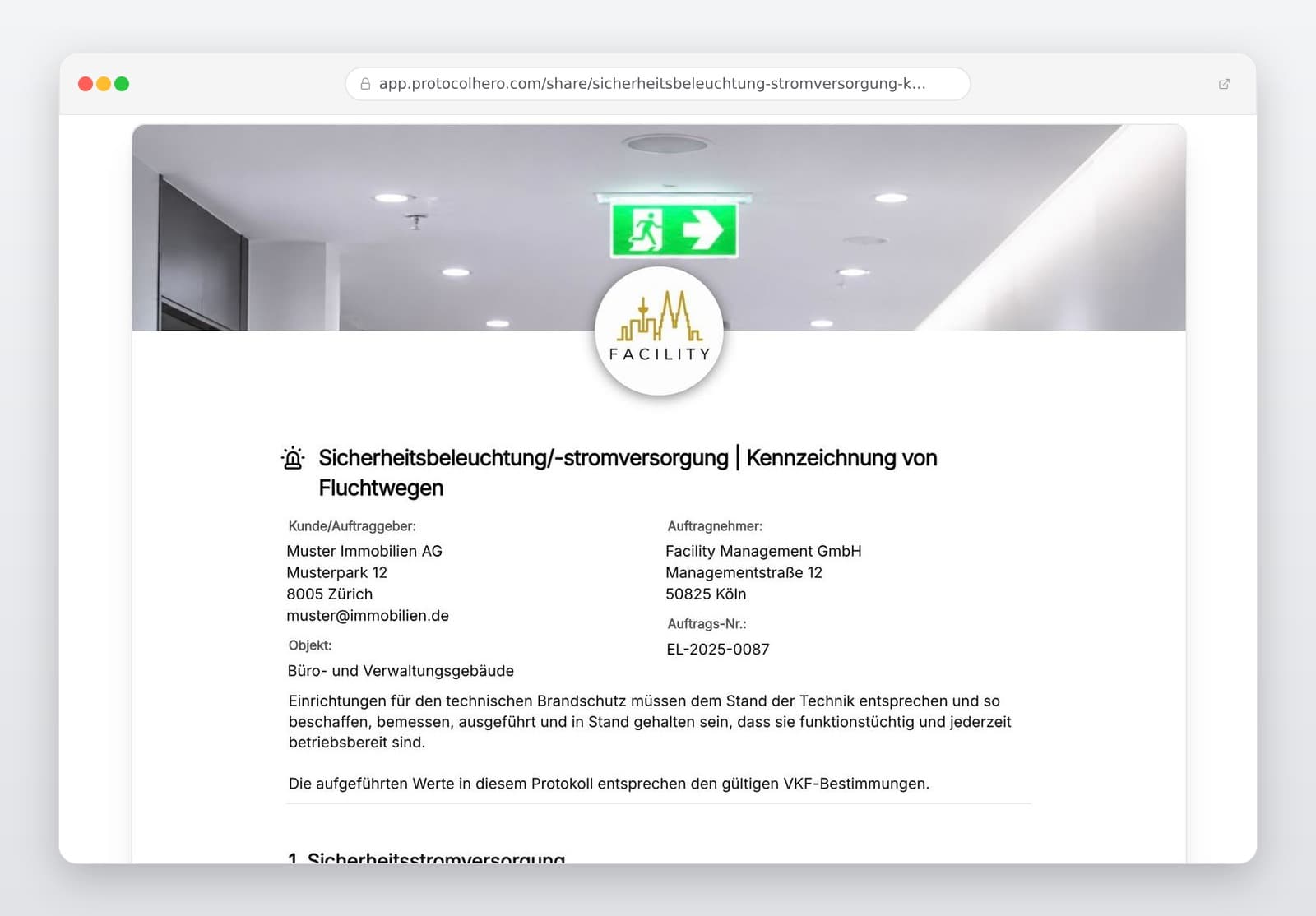
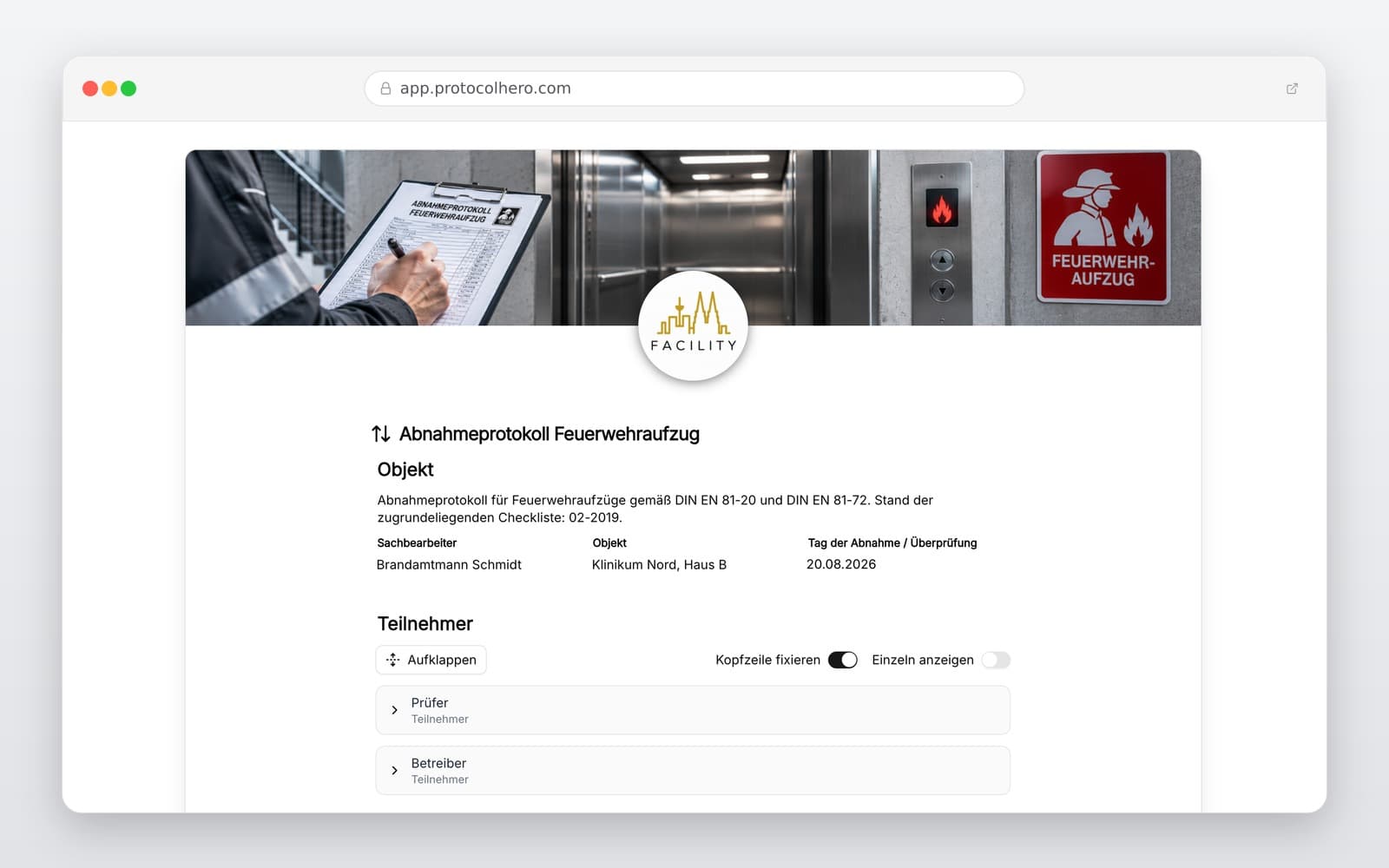
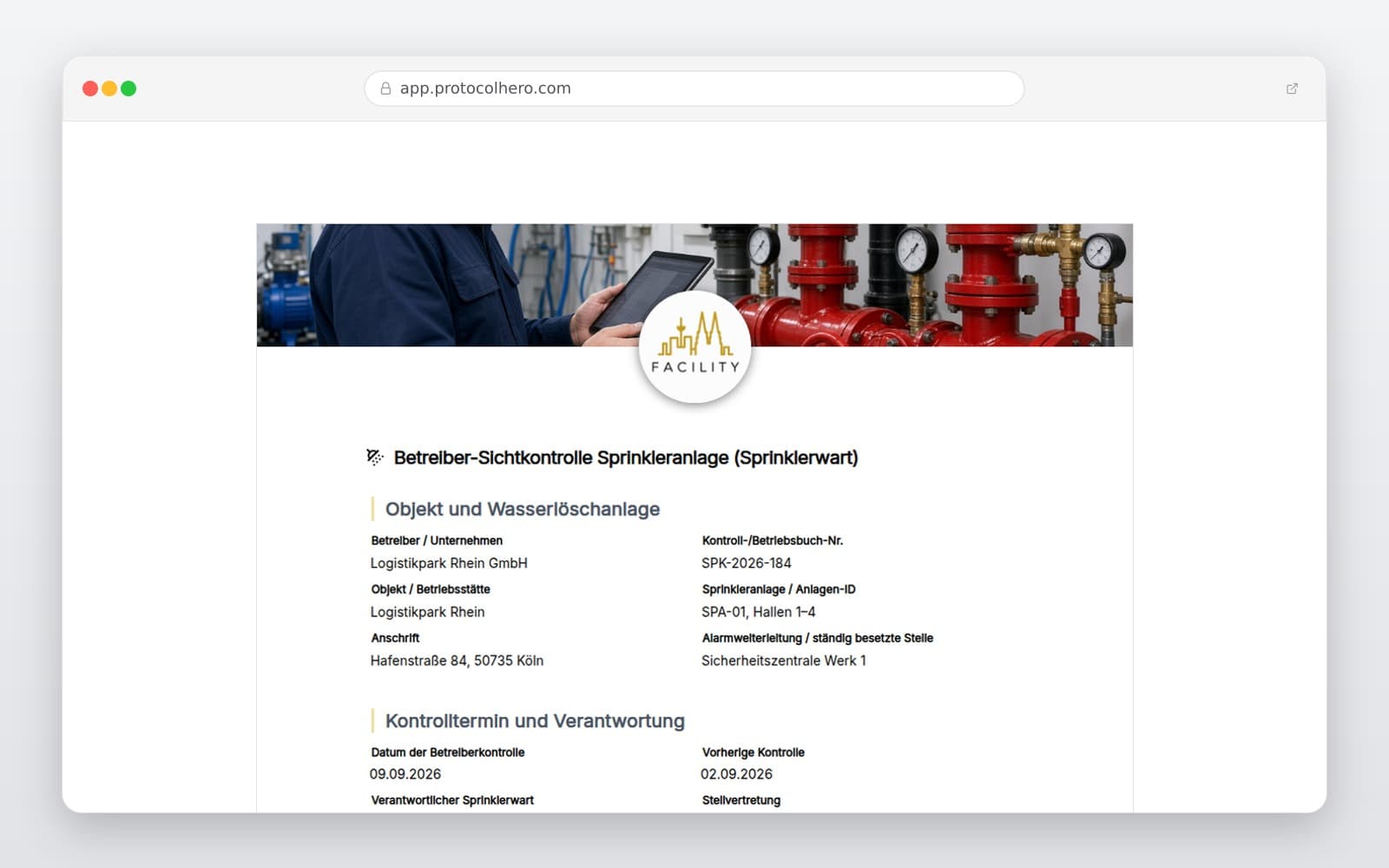
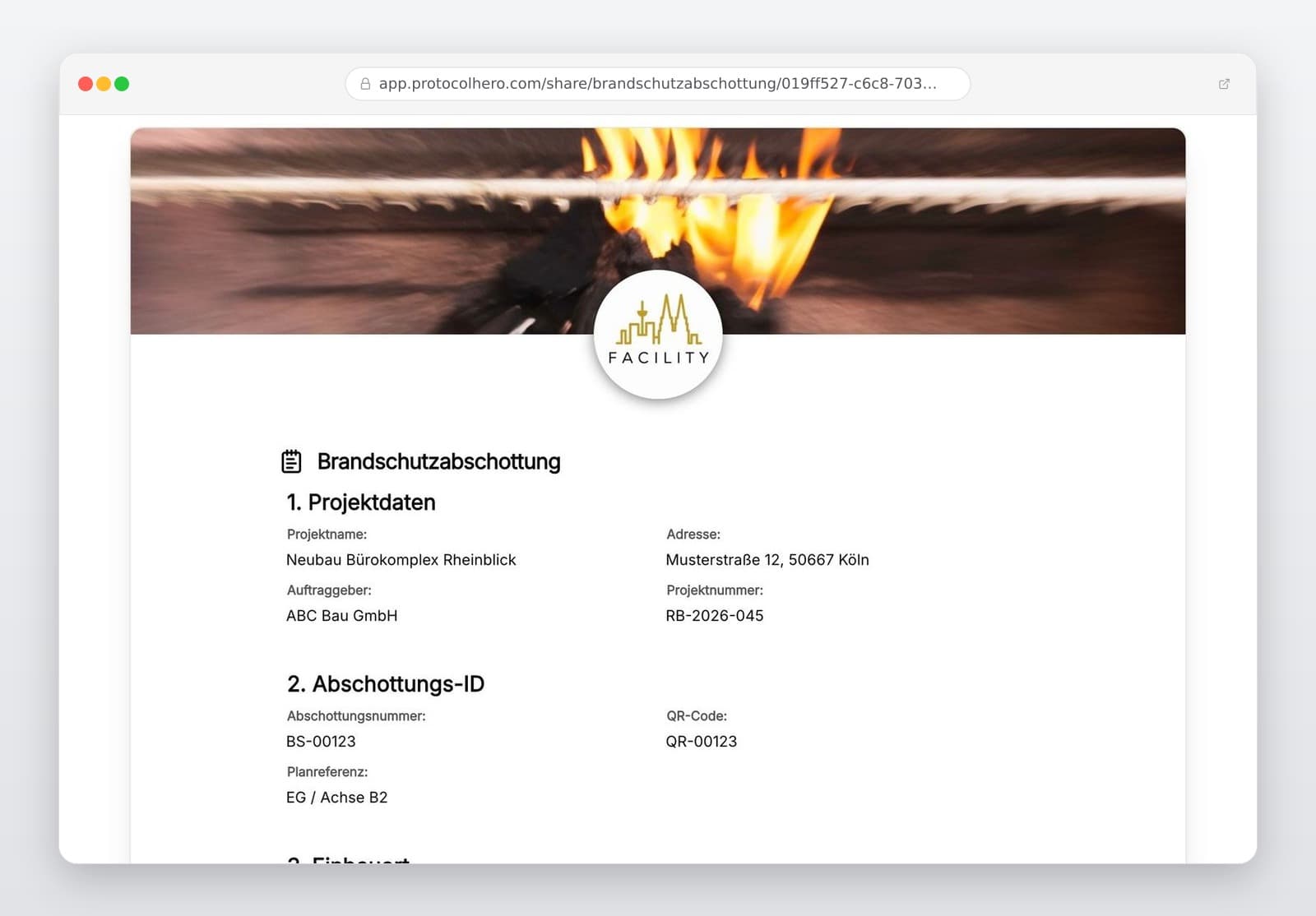
Preview of the “Sprinkler Warden Checklist & Operator Inspection Template” template
Create free account

Short answer

What is the “Sprinkler Warden Checklist & Operator Inspection Template” template for?

Digital sprinkler warden checklist for regular operator inspections according to VdS 2091. Document water levels, valve positions & pump starts reliably.

Use case
Brandschutz
Captured data
Master Data: Operator, facility, system ID, and designated sprinkler warden, Visual Inspection: Water levels, room temperatures, and system pressures, Functional Test: Test alarm, alarm forwarding, and automatic pump start
Result
A structured form that can be completed directly in the browser and reused in ProtocolHero.

Check the template against the technical, contractual and legal requirements of the specific case. ProtocolHero does not replace professional assessment.

Inhalt der Vorlage

What is included in this template?

Master Data: Operator, facility, system ID, and designated sprinkler warden

Visual Inspection: Water levels, room temperatures, and system pressures

Functional Test: Test alarm, alarm forwarding, and automatic pump start

Condition Check: Valve positions, piping network, sprinkler heads, and hangers

Defect Documentation: Deviations, immediate actions, deadlines, and notifications

Completion: Valve resetting, logbook entry, and digital signature

Live form

Fill out this template directly in the browser

No install needed — complete the form below, attach photos, and submit. Create a free account anytime to save and reuse your own templates.

Use the Sprinkler Warden Checklist Digitally

Easily adapt this template to your specific sprinkler system, monitoring scope, and installer instructions – paperless and secure.

Role and Responsibilities of the Sprinkler Warden

The sprinkler warden designated by the operator holds a high level of responsibility for preventative fire safety. Their primary duty is to perform and fully document the regular operator inspections required by law and insurance policies. These routine checks ensure early detection of anomalies to maintain constant system readiness.

It is crucial to distinguish between roles: the sprinkler warden performs visual checks and simple functional tests. This does not replace regular maintenance, inspection, and servicing, which must be executed at fixed intervals exclusively by an approved installer or authorized fire safety contractor.

  • Designation and training of the sprinkler warden according to safety guidelines
  • Regular inspections to maintain operational readiness in line with VdS 2091
  • No unauthorized modifications to system technology or main valve settings
Water Supply, Valves, and System Condition

A central component of the weekly inspection is checking water sources and their associated fittings. This includes visual checks of water levels in storage tanks and monitoring room temperatures in areas prone to frost (such as the pump room). This is essential to prevent frozen pipes or components.

Furthermore, all shut-off valves must be verified in their correct operating position (usually locked open). An unnoticed closed valve can block the water supply during an emergency, leading to catastrophic consequences.

  • Monitoring system pressures in the piping network and alarm valve stations
  • Checking frost protection and ambient temperature in the plant room
  • Visual inspection of pipes, sprinkler heads, and hangers for physical damage or obstructions

Alarm Systems, Pump Start, and Protected Areas

In addition to visual checks, regular functional tests are mandatory. This includes conducting a weekly test alarm via the test line of the alarm valves. This test verifies that mechanical and electrical alarm devices (such as the water motor gong and pressure switches) trigger correctly and transmit the signal to the fire alarm panel or a constantly monitored station.

The automatic startup of sprinkler pumps (e.g., upon pressure drop) must also be simulated and logged at specified intervals. Simultaneously, inspect the protected areas to ensure they are free of obstructions and that the spray pattern of the sprinkler heads is not blocked by storage goods or physical structures.

  • Weekly activation of the test alarm (wet or dry alarm valves)
  • Testing the automatic pump start and recording operating parameters
  • Ensuring minimum clearances are maintained below the sprinkler level

Deviations, Installer Handover, and Logbook

If any deviations or defects are detected during inspections—such as pressure drops, leaks, obstructed sprinklers, or error messages on the control panel—they must be documented immediately. The sprinkler warden must initiate defined immediate actions, set deadlines for resolution, and notify the responsible internal departments.

In the event of safety-critical defects or unclear system states, the approved installer company must be contacted immediately. All tests, measurements, identified defects, and corrective actions must be recorded in the official sprinkler system logbook (e.g., according to VdS 2212). Seamless documentation serves as crucial evidence for insurers and authorities in case of damage.

  • Immediate logging of all detected deviations and defects
  • Clear handover of repair and complex maintenance tasks to the installer company
  • Compliant archiving of all inspection reports in a physical or digital logbook
Häufige Fragen

Fragen zur Vorlage „Sprinkler Warden Checklist & Operator Inspection Template"

Mehr als eine Vorlage

Was ProtocolHero zusätzlich für dich übernimmt

Eine Vorlage allein ist erst der Anfang – ProtocolHero macht aus jedem Protokoll einen durchgängigen digitalen Workflow mit KI-Unterstützung, Workflow-Freigaben und revisionssicherem Archiv.

HERO Assistant – KI-Chat für Dokumentenerstellung

Der HERO Assistant ist der eingebaute KI-Chat von ProtocolHero. Du kannst per Spracheingabe ein komplettes Dokument anlegen lassen oder ein bestehendes PDF, Foto oder Word-Dokument hochladen – die KI liest die Struktur aus und baut eine wiederverwendbare Vorlage daraus.

Auto-Fill aus Sprache, Foto und Datei

Beim Ausfüllen kannst du das Dokument per Sprachsteuerung diktieren – die KI ordnet die Inhalte automatisch den richtigen Feldern zu. Oder du lädst Fotos, Scans, Verträge, Datenblätter oder Ausweise hoch: Der HERO Assistant extrahiert die Daten und befüllt das Formular vor – du prüfst und unterschreibst.

Foto- und Video-Upload direkt im Dokument

Zu jedem Bauteil, Messpunkt oder Schadensbild kannst du Fotos und Videos direkt aus der App anhängen. Videos sind besonders nützlich, wenn ein Schadensbild dynamisch ist – ein einzelnes Standbild würde den Befund nicht ausreichend dokumentieren.

Kommentare als Aufgaben – intern und mit dem Kunden

Jede Position im Dokument kann kommentiert und als Aufgabe an einen Kollegen, an dich selbst oder direkt an den Kunden zugewiesen werden. Kommentare können wahlweise rein intern bleiben oder im freigegebenen Kundenlink mitgeteilt werden.

Workflow: Bearbeiter zuweisen, Prüfer freigeben

Dokumente lassen sich an Kollegen weiterleiten und können einen festen Prüfer haben, der die letzte fachliche Freigabe erteilt, bevor das Dokument unterschrieben oder an den Kunden geht.

Activity-Log für lückenlose Nachvollziehbarkeit

Jedes Dokument hat einen vollständigen Aktivitäts-Verlauf: Wer hat wann was geändert, kommentiert, hochgeladen, freigegeben, unterschrieben. Das Log ist auf Wunsch auch im Kunden-Freigabelink sichtbar – ideal für Auditoren, Versicherer und Kunden.

Eindeutige Protocol-ID je Dokument

Jedes Dokument bekommt automatisch eine eindeutige Protocol-ID, mit der es sich zweifelsfrei referenzieren, verlinken und im Audit-Trail wiederfinden lässt.

Automatische Berichts-Nummerierung

Neu

Fortlaufende, lückenlose Berichts-Nummern (z. B. Protokoll-2026-001, 002, 003 …) je Dokumenttyp und Kunde – ohne manuelles Vergeben, ohne Dubletten.

Web-Formular & Inbox

Neu

Vorlagen lassen sich als öffentliches Web-Formular auf der eigenen Website einbinden – ein ausgefülltes Dokument landet automatisch in deiner ProtocolHero-Inbox zur Weiterbearbeitung.

QR-Code-Etiketten für Anlagen und Bauteile

Neu

QR-Code-Etiketten pro Anlage, Bauteil oder Abschottung, die beim Scannen direkt das hinterlegte Protokoll, die Historie und alle Wartungs- bzw. Prüfdokumente öffnen.

763 × genutzt

Diese Vorlage in 2 Minuten selbst nutzen

Vorlage übernehmen, an deinen Betrieb anpassen und direkt vor Ort ausfüllen – kostenlos testen, keine Kreditkarte nötig.