1. What is Required for Professional Electrical Installation Testing?
Standard-compliant testing of electrical installations involves much more than just recording isolated measurements. For initial testing (e.g., DIN VDE 0100-600) as well as periodic testing (e.g., DIN VDE 0105-100), the process is divided into three key phases: inspection, testing, and measurement. Each phase must be fully documented in the test report.
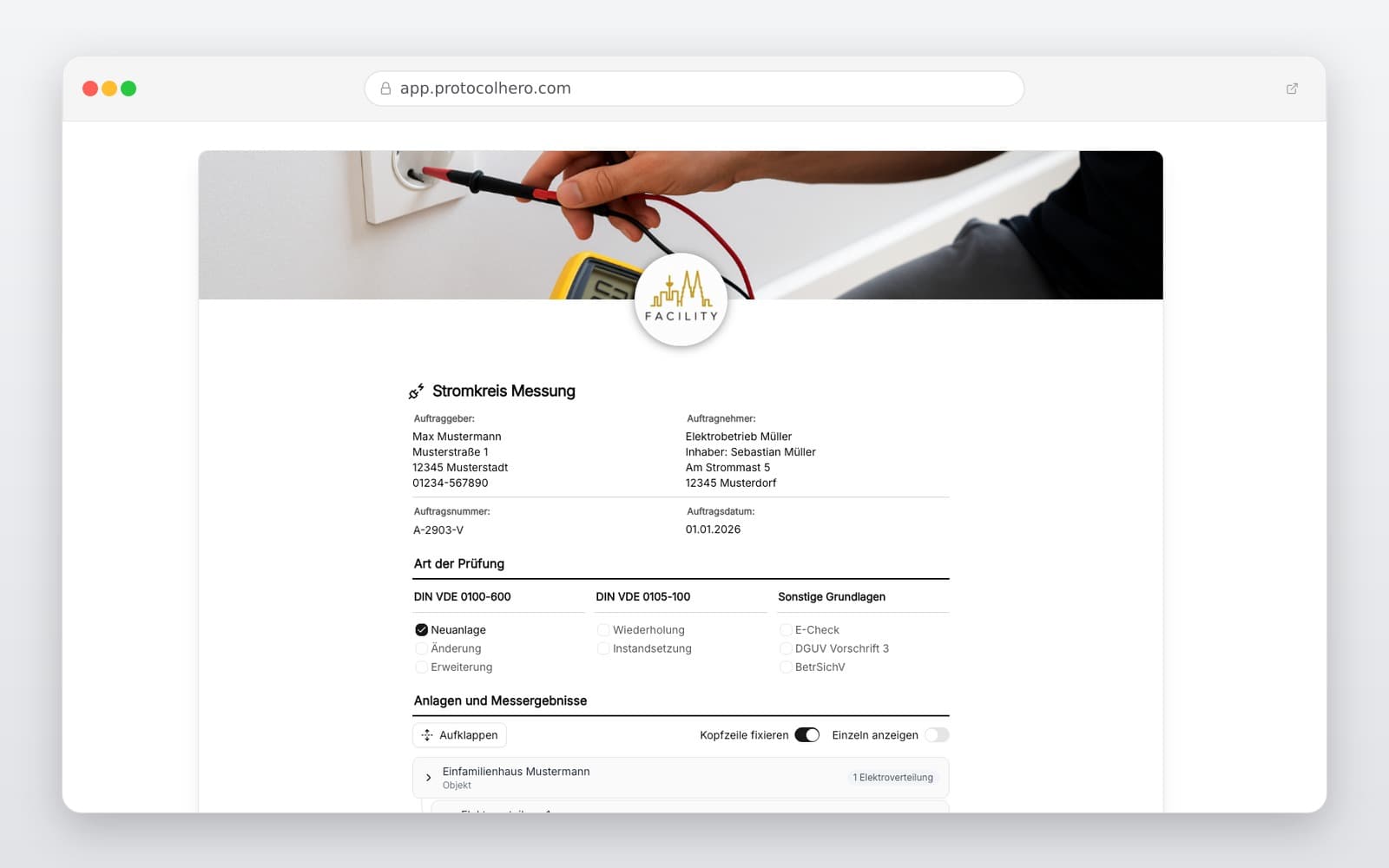
Clear mapping of measurement results to the installation structure is critical. A measurement value without context is legally and technically useless. Instead of a simple entry like 'Insulation resistance: 200 MΩ', a professional report requires clear traceability: Sub-distribution EG → Circuit 6 → Living Room Lighting → Insulation resistance: 200 MΩ. This ensures clarity even years after the test.
- Recording of the grid system (e.g., TN-S, TT) and installation specifications
- Verification of protective measures against electric shock
- Detailed mapping of distribution boards, RCDs, and individual circuits
- Measurement of protective conductor continuity, insulation resistance, and loop impedance
- Testing of RCD trip times and trip currents
- Logging and clear mapping of identified defects with photos