

Digital protocols for drywallers
Record framing, boarding, openings and acceptance per room or floor with photos — including lining notes, without a certificate claim.
Bring an existing form. In the call we map your real workflow in ProtocolHero and show what the finished PDF looks like.
How Drywallers document today – and what it costs
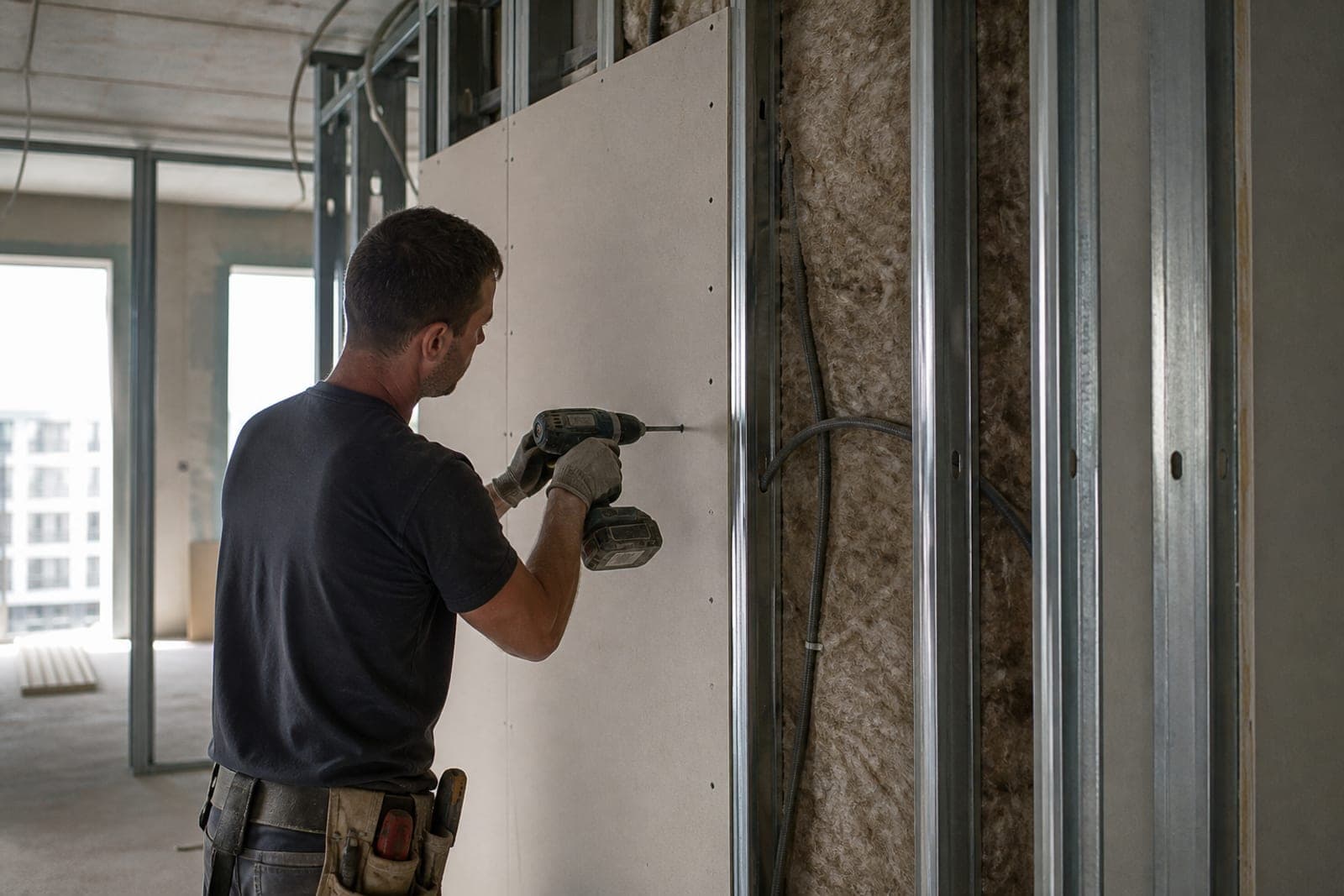
In drywall the work is closed up before anyone has checked it: stud spacing, insulation, board layers, connections, penetrations — after the second layer only the surface is visible. Whether the wall is built as specified in the bill of quantities is then known only to the crew. Today there are, at best, a few phone photos and the foreman's memory.
That costs: at acceptance the site management demands proof of the layer build-up per wall — and the company has photos, but not assignable. In a sound insulation complaint after a year the question is whether the insulation was fully inserted — without a photo it is claim against claim. Additional work such as extra layers or changed penetrations is carried out but not notified.
For the owner this means: they do not know which walls were closed with proof, how much additional work remained unpaid and whether the crews document before closing or after. ProtocolHero proves concealed work completely before closing.
Who ProtocolHero is built for
- Drywall companies with several crews
- Fit-out companies that build walls, ceilings and shafts in series for general contractors
- Companies with projects in hospitals, hotels and offices where site management requires proof per wall
- Companies with subcontractors whose layer build-up they are responsible for before closing
Four things that change for management
Not more forms, but less rework, less risk and a business you can show at any time.
Layer build-up per wall with photo, before the second layer goes on
The template has walls or components as recurring blocks with required fields for studwork, insulation, layers, connections and photos per layer — submitting is only possible once the photos are there. Everything attaches to project and component in the database, with timestamp. At acceptance and years later the build-up is proven.
Penetrations and seals documented, responsibility clear
Every penetration is recorded as a row: location, trade, photo before closing, who carries out the seal. The documentation shows what drywall prepares and what another trade or the specialist company closes — professional responsibility is visibly delimited, not blurred.
Additional work notified and signed the same day
Extra layer, changed wall height, subsequent opening: the foreman records the work with photo, the other side's site management signs on the tablet, the PDF goes out via link. The remark becomes the change order before the wall is closed.
Every component in the project with status
The document hub shows per project, floor and crew which walls are documented, closed and accepted. The Hero Agent creates open items from the acceptance as cards with owner and deadline and asks for the photo of completion.
Schluss mit Word, Excel und Zettelwirtschaft
Diese typischen Hürden kennen Betriebe in Ihrem Gewerk – und genau hier setzt ProtocolHero an.
What sits behind the board is no longer evidenced after closing.
Openings, shafts and junctions are missing from acceptance.
Fire lining is claimed verbally — without a photo, and ProtocolHero issues no seal.
Floor acceptance is a scrap without photos.
So unterstützt ProtocolHero Drywallers
Vor Ort erfassen, im Team prüfen und freigeben, als PDF übergeben – digital, mobil und nachvollziehbar.
Framing & boarding
Record build-up and boarding with a photo before the surface is closed.
Document lining — no seal
Record lining notes (e.g. location, photo). ProtocolHero does not rate a fire class and issues no certificate.
Openings & junctions
Capture openings, shafts and junctions per room as recurring blocks.
Acceptance per room or floor
Acceptance with remaining items, photos and signature — as a PDF to site management.
From template to proof
One continuous process instead of isolated tools – identical for every team, with clear ownership per step.
- 1
Templates for concealed work
Layer build-up wall and ceiling, penetration list, additional work notice, notice of concerns, acceptance — maintained centrally, with components as recurring blocks and required photos per layer.
- 2
Projects and components in the database
Project, floor, wall or ceiling number, wall type from the bill of quantities, the other side's site management. Every protocol attaches to the component.
- 3
Crew documents before closing — offline too
Photo per layer on the smartphone, in the shell without signal. The foreman cannot submit before the required photos are there — so they photograph before boarding.
- 4
Additional work and concerns the same day
Notice with photo and the site management's signature; the Hero Agent creates the card and reminds when the countersignature is missing.
- 5
Approval and acceptance
The site manager reviews and approves; general contractor or client receives link and PDF per component or as a bulk export per floor. Open items run with deadline on the board.
- 6
Archive for the warranty period
The history per component remains available with photos and timestamps — for sound insulation complaints, conversions and queries from other trades years later.
The wall that gets reopened is the expensive one
A drywall company with six crews easily builds 400 walls and ceilings a month. If each component costs 10 minutes for assigning photos, compiling proof and reconstructing additional work, that is over 65 hours a month — site manager time missing on site.
The real item is the wall reopened for proof, or the sound insulation complaint in which the company pays because there is no photo of the insulation. A single removal and rebuild costs more than a year of office hours. With required photos per layer, timestamp and approval, the question 'how is the wall built?' is answered in seconds — without drilling.
- Required photos per layer — no wall closed without proof
- Penetrations documented with clear responsibility, without blurring professional roles
- Additional work signed before closing instead of discussed afterwards
- Proof per component via link — for acceptance and warranty
Inspection protocols, maintenance reports, acceptances, fault reports
Retyping, matching photos, follow-ups, creating the PDF, filing
Review and approve – the rest is captured on site
Per year, office only
€64,800
20 minutes less office work per protocol × 4,320 protocols × €45/h
- 4,320
- protocols per year
- 1,440
- office hours saved per year
- 180
- working days (8 h) per year
Not included: fewer follow-ups on site, less rework, faster invoicing and the time you save when someone asks for proof. We measure the real numbers in the pilot.
Start a pilotReal customers, real statements
Our references come from the electrical and painting trades and use ProtocolHero for construction documentation, acceptance protocols on site and records towards insurers — the same mechanism as proving concealed work in drywall.
„Mit ProtocolHero läuft unsere Dokumentation heute deutlich strukturierter und einfacher. Gerade im Alltag ist es wichtig, dass Informationen nicht verloren gehen und wir alles schnell an einem Ort wiederfinden. Das spart Zeit und bringt mehr Klarheit ins Team. Was ich außerdem gut finde: ProtocolHero ist vielseitig einsetzbar – ob Schlüsselübergabe, Baudokumentation oder wichtige Prüfprotokolle.“
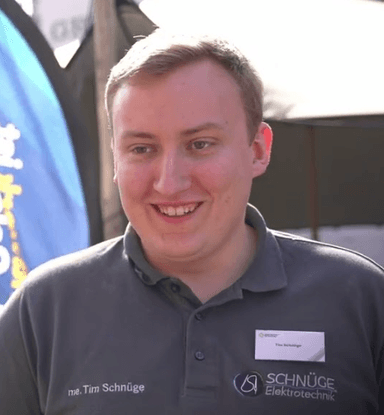

„Ich nutze ProtocolHero in meinem Elektrofachbetrieb für die Erstellung von Prüf- und Abnahmeprotokollen und bin sehr zufrieden. Besonders praktisch finde ich, dass ich Protokolle direkt digital erstellen und problemlos auf der Baustelle ausfüllen kann. Die Software ist übersichtlich und einfach zu bedienen – deutlich weniger Papierkram und eine viel effizientere Dokumentation.“


„Gerade bei Wasserschäden und Arbeiten für Versicherungen ist eine saubere Dokumentation extrem wichtig. Es muss nachvollziehbar festgehalten werden, welcher Schaden vorlag, welche Maßnahmen durchgeführt wurden und wie die Instandsetzung erfolgt ist. Das hilft uns intern für den Überblick, aber auch nach außen bei Rückfragen mit Kunden und Versicherungen.“


Beliebte Vorlagen für Drywallers
Starten Sie mit fertigen Vorlagen oder bauen Sie sich Ihre eigenen – ganz ohne IT-Kenntnisse.
Fragen rund um Drywallers
Note: ProtocolHero supports structured, traceable documentation. The professional assessment and the correct execution of inspections remain the responsibility of the executing company and its qualified personnel.
Das könnte Sie auch interessieren
See your Drywallers workflow in ProtocolHero
In 15 minutes we clarify where time is lost today, whether ProtocolHero fits your process and team size, and how a real report of your business looks digitally. No generic product pitch.